Summary
Led product and experience design for a new SaaS product within the dental sector.
Used early beta testing and continuous feedback loops to support product adoption and market fit.
Designed workflows for multiple user types across the same practice ecosystem.
Supported rapid iteration and delivery cycles to maintain product momentum and continuous improvement.
Achieved strong word-of-mouth growth and early customer advocacy.
Earned a 5-star Google user rating.
Winner of an industry innovation award.
Scaled to become the UK’s leading dental CRM platform.
Successfully acquired by Agilio Software in 2025.
DenGro | B2B SaaS
Building and scaling an award-winning vertical SaaS product.
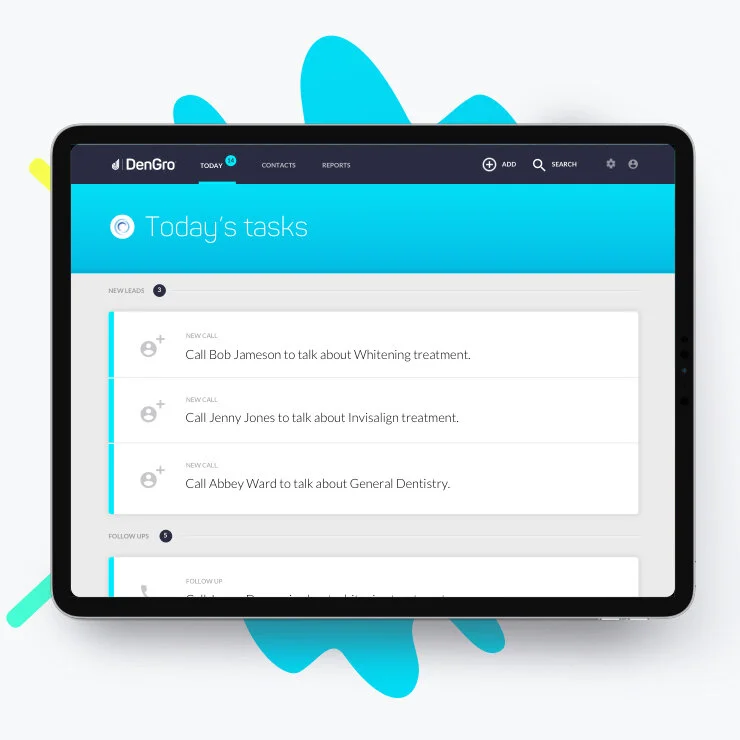
DenGro was built to solve a growing operational problem within dental practices: managing, nurturing and converting large volumes of patient enquiries efficiently.
As lead product designer and co-founder, I helped shape a CRM platform that simplified complex workflows, improved visibility across the patient journey and enabled practices to make more informed, data-driven decisions.


The Goal
Create a truly useful business tool that provides value and insight for all stakeholders.
The Challenge
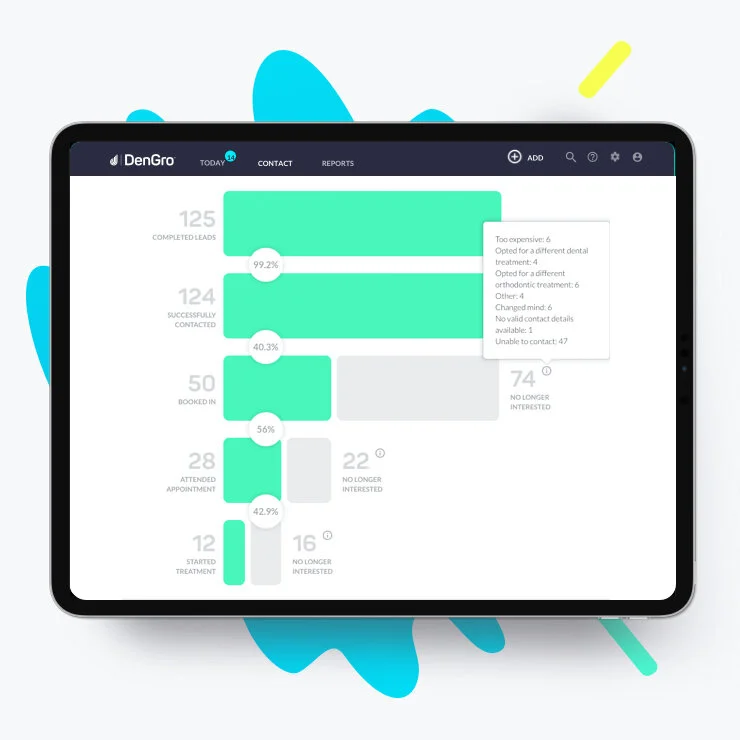
Dental practices are busy places. The last thing staff need is ‘another tool’ to ‘help’ them to do their job. So, DenGro had to be two things; simple - to ensure it was adopted by the reception and wider practice team and; empowering - so the manager and principal had the numbers they needed to make business and marketing decisions (and keep paying the monthly subscription).
My role
Co-founder & Lead Product Designer, responsible for:
product concept
product experience strategy
workflow design
UX/UI direction
customer research
customer journey mapping
brand and product cohesion
collaborating with engineering and stakeholders


Research
As the stakeholders were already immersed within the dental industry, a certain level of user insight was already known. However, qualitative research in the form of face to face and telephone interviews were conducted with stakeholders to ensure initial assumptions were accurate.
User Types
There were four types of user who could have access to DenGro, for different purposes.
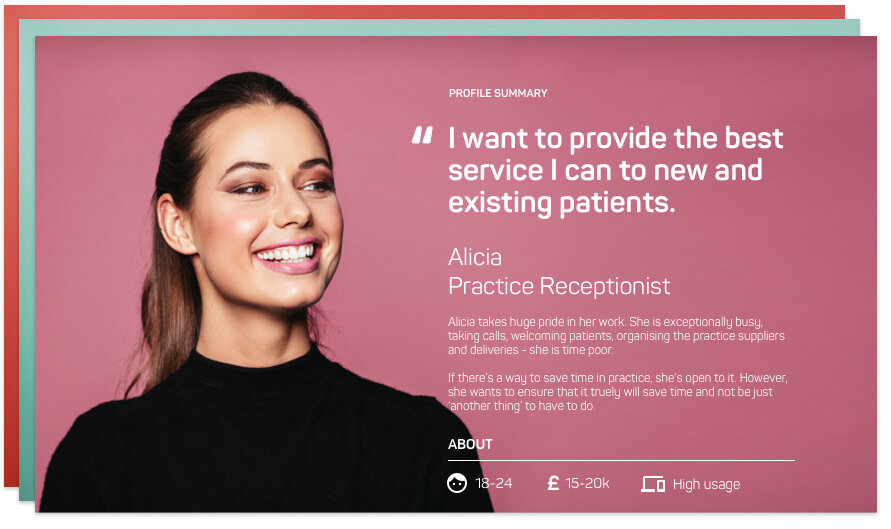
Reception Team - to follow up and document leads interested in treatment.
Practice Manager - to check how many leads are enquring about treatment as well as check on staff performance.
Practice Principal / Business Owner - to have an overview of practice performance.
Media/Marketing Agency - to check on lead conversion peformance and if required, adjust the media buying accordingly.


User Personas
Personas were created for each User Type. Once created, based on the research, this provided some interesting insight into the products' audience. For example, the age and digital competence of the Reception teams was extremely broad. This would need to be accounted for in the design and presenation of the tool.
Initial Designs
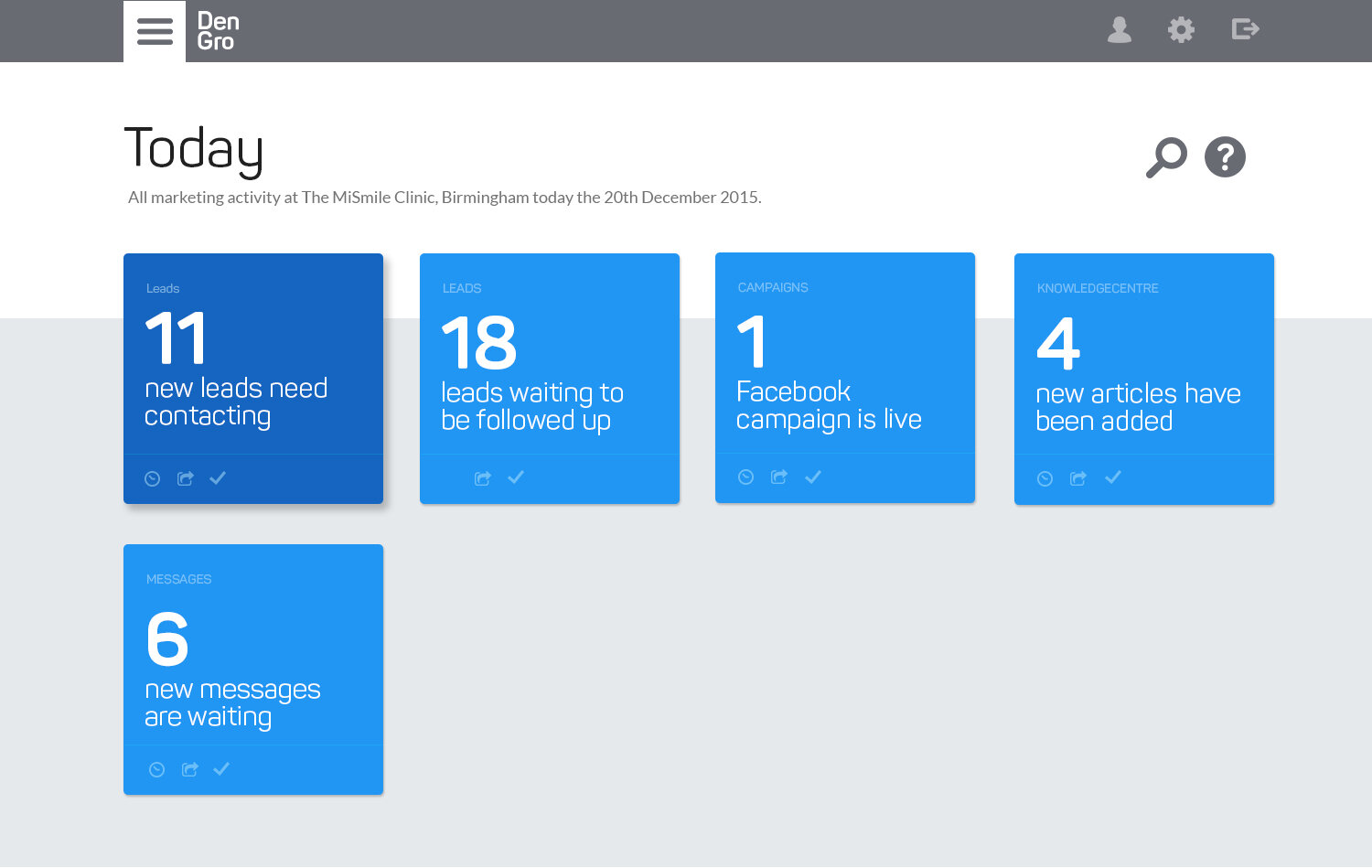
With research in hand and list of specific thoughts on feature requirements initial designs were drawn and then visualised in Sketch. A basic interactive prototype was then created in Invision and shared and tested with some of the research candidates.
Minor feedback was provided, which was rolled into the next phase of the process, the MVP.

MVP
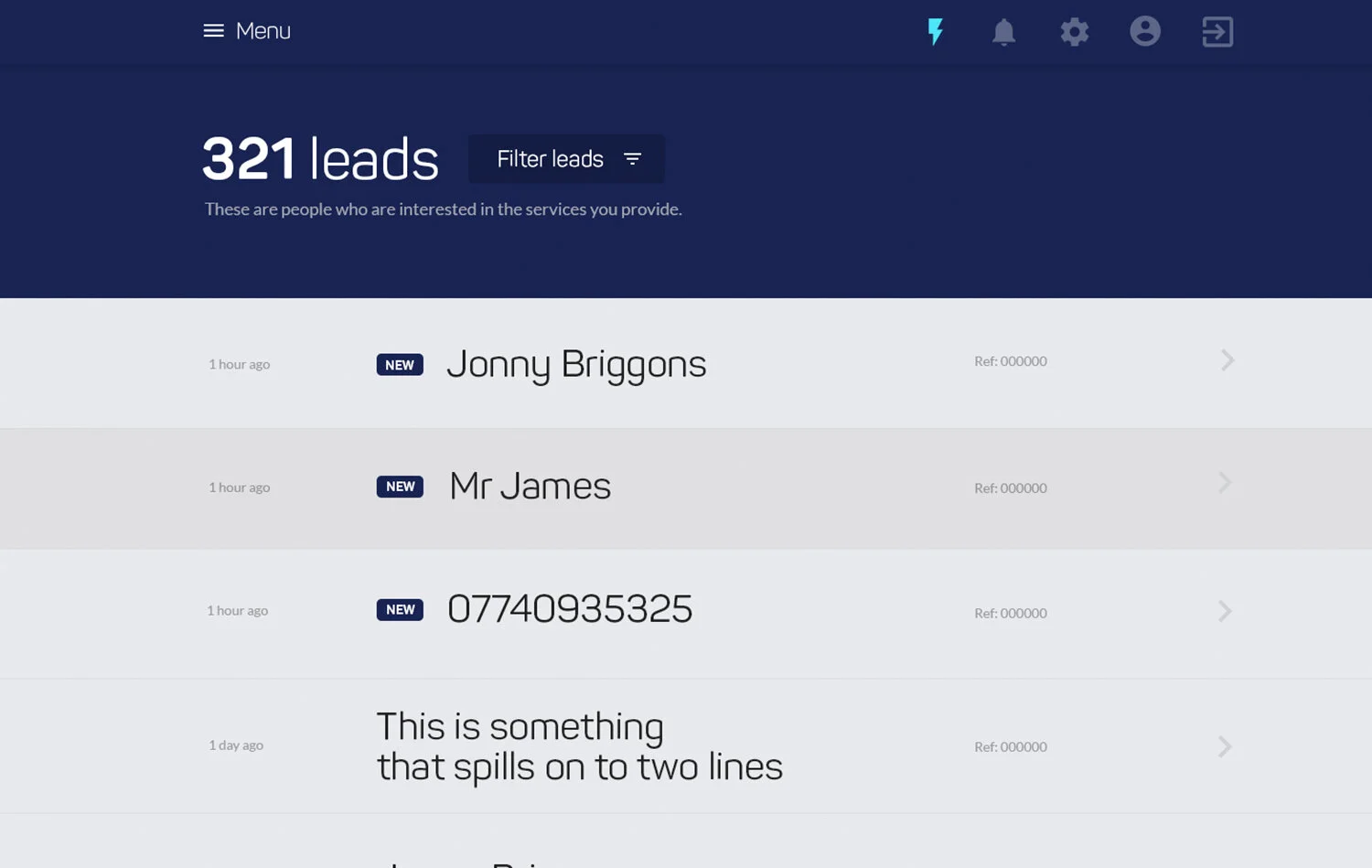
The MVP was relatively high fidelity, engineered over 8 weeks and rolled out to a BETA test group of 30 practices. Introductory training was provided and instant chat support offered to practices where required.
BETA Testing
BETA testing was carried out over a period of 6 months and the product reviewed using;
Qualitative research - telephone interviews.
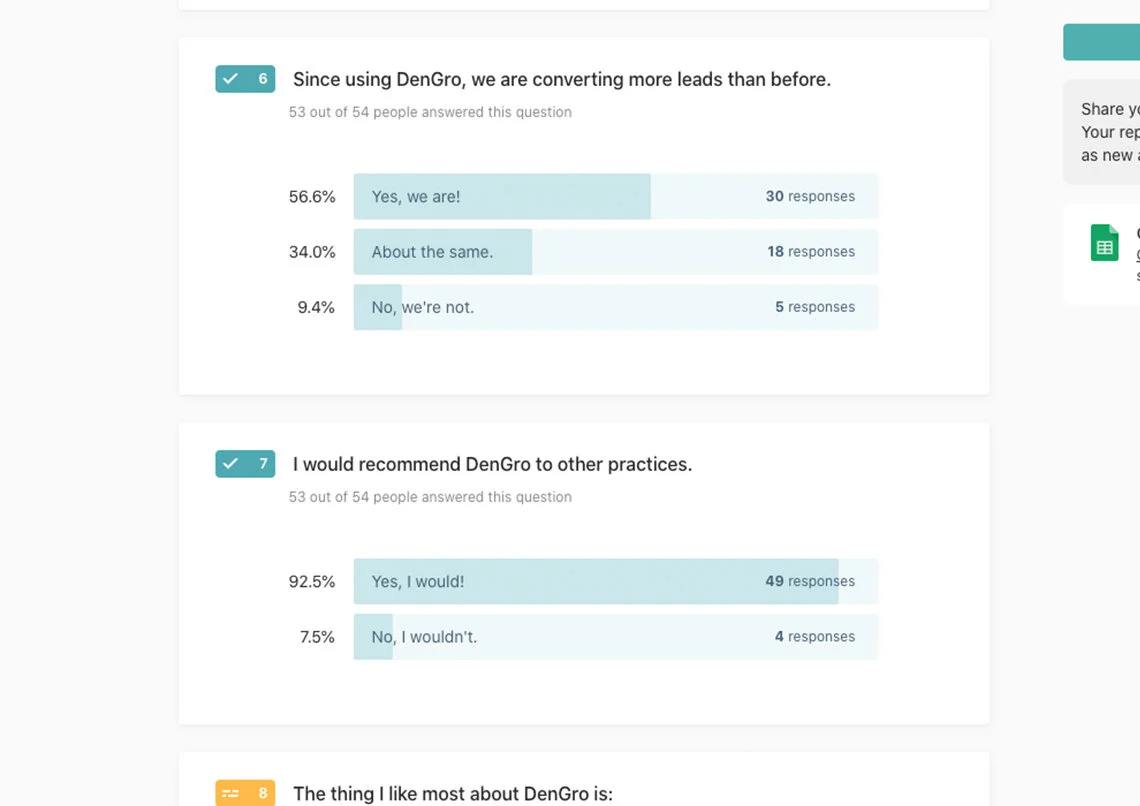
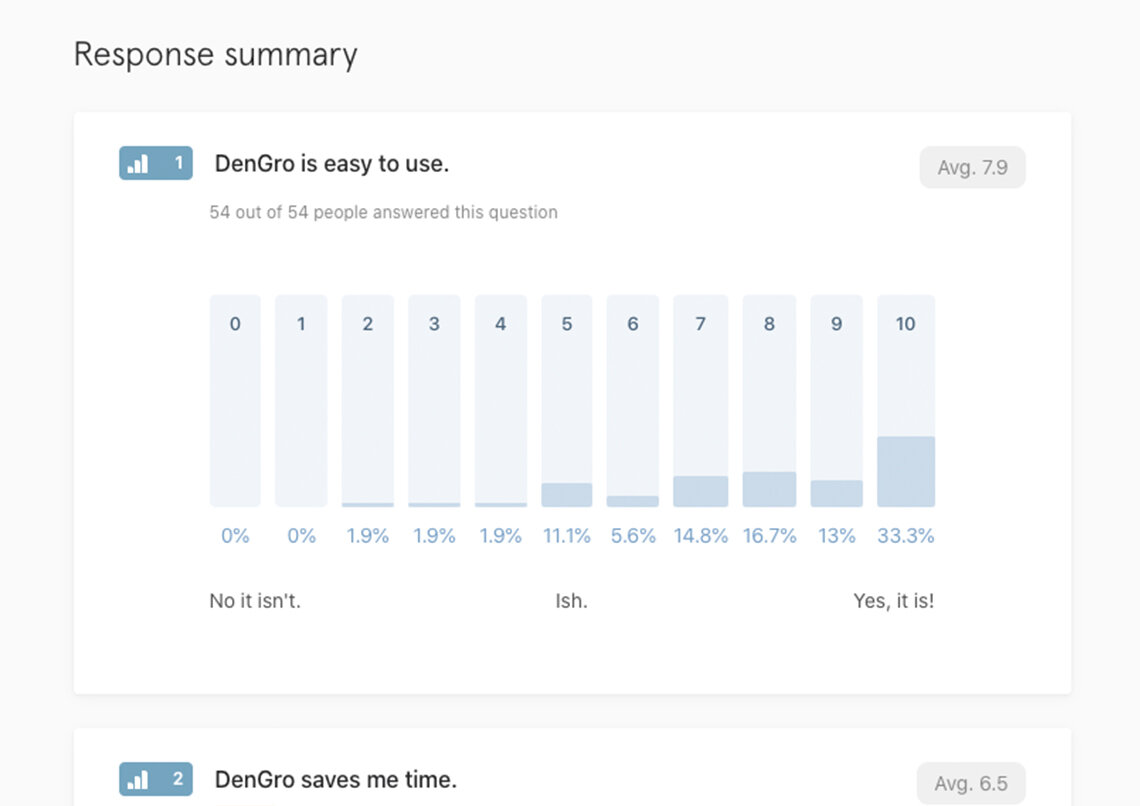
Quantitative research - online questionnaires.
Support tickets - tagging tickets to count repetitive instances of support.
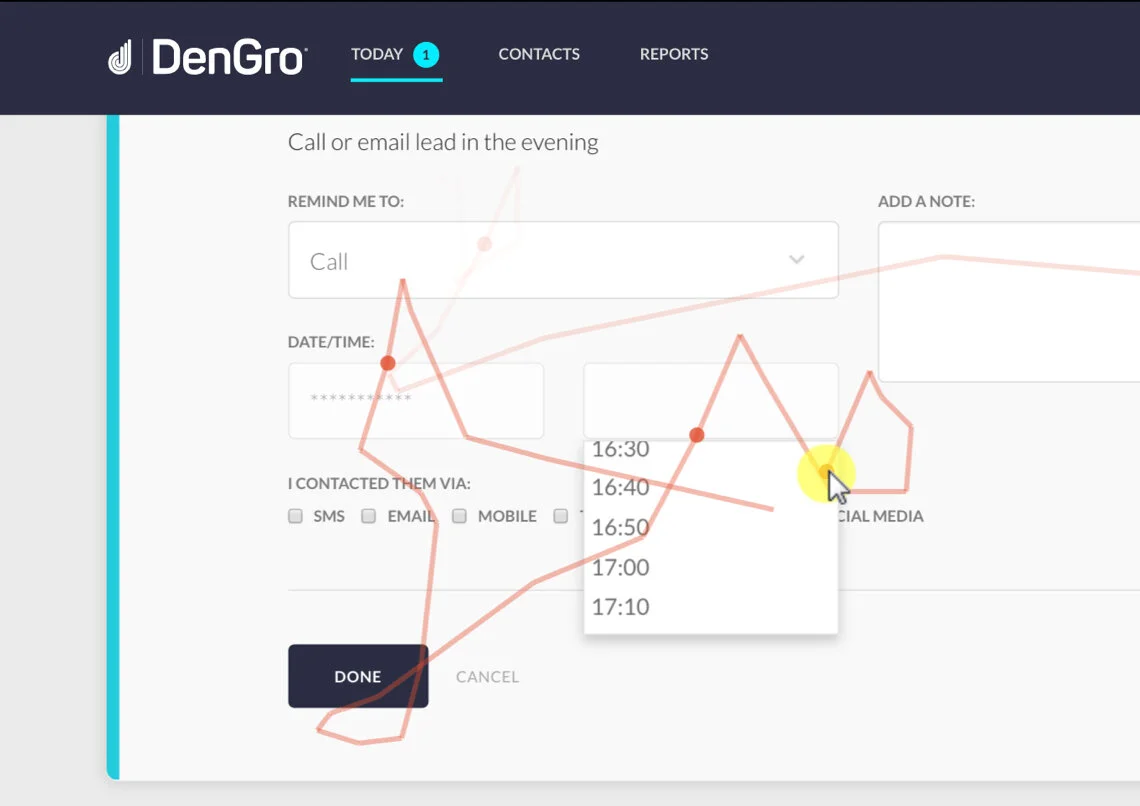
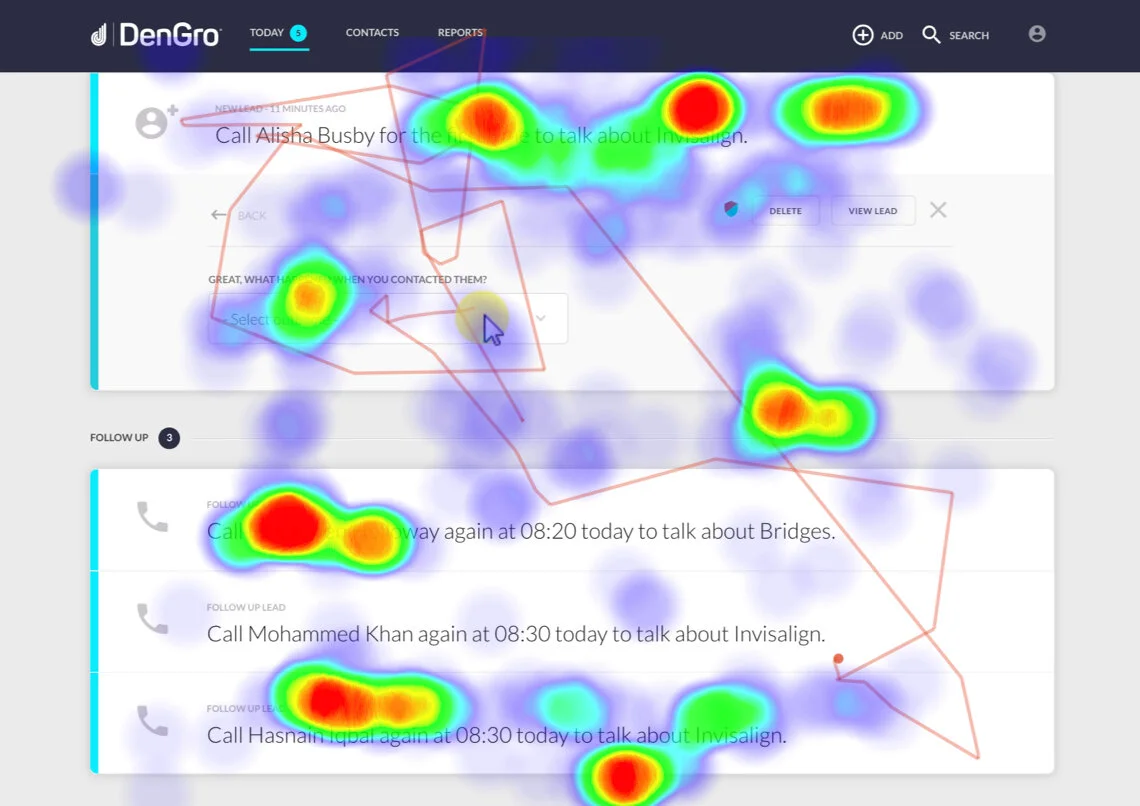
Hotjar - reviewing actual user journeys to highlight any pain points.
On the whole the tool was considered very useful in practice, but we discovered two major fundamental flaws.
Once patients decided to go ahead with treatment, Reception teams would forget to mark leads as ‘Going ahead’ and so the conversion loop (and all the reporting with it) would be incomplete.
‘Tasks’ were passive. They told the Reception team that a new lead existed, but it did not provide instruction.
Key product decisions
Simplifying operational complexity
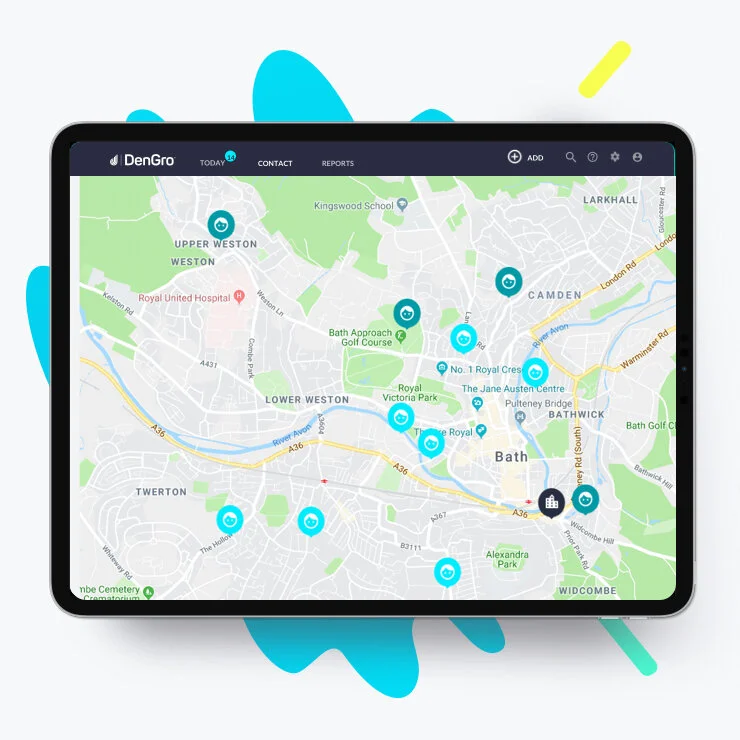
Dental practices needed visibility across enquiries, appointments, follow-ups and conversions without increasing administrative burden.
Reducing cognitive load
Interfaces were designed to surface actionable information quickly, helping busy teams prioritise the next step in the patient journey.
Designing for behavioural consistency
Automation and workflow structures encouraged more consistent follow-up behaviour across teams, improving conversion opportunities.

BETA Learnings
DenGro needed to make sure that tasks were actioned so the conversion loop was closed.
To combat these two flaws, a redesign of the interface was proposed - a wizard style interface would be introduced, one which asked the user to complete an action before being able to move to the next step of the conversion process and by answering those questions in turn, moving their lead through the conversion process.
This method also provided much more data and insight about each stage of the conversion process.
User Journey Flows
Closed user flows were a great idea, but with multiple responses per question, could very quickly become a complicated sequence of logic. The following image shows the logic flow for the initial question posed to users for the dental treatment, Invisalign.


Outcome
The reengineered product was released to the BETA test group and very quickly provided more solid user and consumer results, with conversion loops closed and users suggesting the redesigned interface was superior to the last.
With a sound product, DenGro was released from BETA to the wider dental industry.
Project Learnings
I've taken away a great deal of learning from this project, the main points being:
We understood that we had to make the product as simple as possible, but we had assumed that users would actually want to, or remember to complete tasks. This wasn’t always the case. Creating the ‘wizard’ style interface made it fool-proof.
We could have overcome this reengineering stage by creating a high-fidelity prototype, one which truly replicated every part of the initial process.
What a user says they will do and what a user actually does can be two completely different things!
Product Success
DenGro is Google rated 5* and Trustpilot rated 4.5/5 by its users.
DenGro was awarded ‘High Technology Launch of the Year’ and shortlisted for ‘Innovation of the Year’ by the Dental Industry in 2018/19.
DenGro currently has a customer base of over 500 practices in the UK.